


Thank you for Subscribing to Eldercare Review Weekly Brief
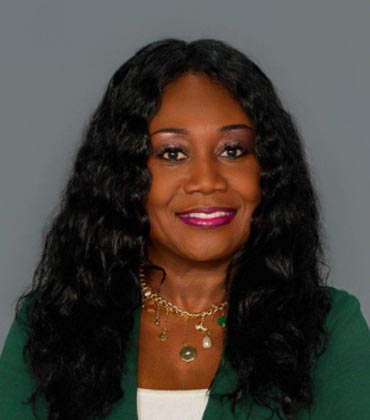 Corlette Deveaux, CEO and Co-Founder
For decades, elder care has largely operated around a familiar model: something changes, someone notices and the healthcare system responds. But for an older adult living at home, in assisted living or supported by family caregivers, health does not change only during a physician appointment. It changes continuously in the hours, days and weeks between visits.
Consider a subtle decline in activity, a changing heart-rate pattern, increasing blood-pressure variability, poor sleep, a missed medication, a fall or wandering outside a familiar area. Individually, these changes may not always appear significant. Viewed together and over time, however, they may tell a much more important story. This is where one of the most consequential developments in elder-care technology is emerging: the movement beyond remote monitoring toward AI-powered early warning health intelligence.
Traditional healthcare encounters provide valuable snapshots. A blood-pressure measurement, medication review, physical examination or laboratory result tells us something about an individual at a particular moment. Connected technologies expanded that picture by allowing health information to be captured outside conventional clinical environments. Remote patient monitoring, wearable devices and home-based sensors have made it increasingly possible to see what is happening beyond the walls of the physician's office or hospital.
But the next challenge is not obtaining more data. It is determining what the data means. An elder-care organization monitoring hundreds or thousands of people does not need thousands of additional numbers demanding human review. Families do not need an endless stream of notifications, and physicians and caregivers certainly do not need another dashboard they must constantly watch. They need meaningful information and the ability to recognize patterns, changes and exceptions that may deserve attention.
That distinction is fundamental. Monitoring asks: What is the reading? Health intelligence asks: What is changing, what may be important and who may need attention? Artificial intelligence is increasingly making that second question possible. Wearables, home sensors and connected devices can create continuous streams of information. AI and advanced analytics can help organize those streams longitudinally, examining patterns rather than relying only on isolated measurements. The result is an emerging intelligence layer around the older adult one designed not merely to collect information, but to help transform continuous information into greater awareness.
 This represents an important shift from event detection to change detection. A fall is an event; gradually declining mobility is a change. A dangerously abnormal measurement is an event; a sustained departure from an individual's established pattern is a change. Wandering beyond a designated safe area is an event; changes in movement or daily activity patterns may provide additional context about how an individual is functioning. Historically, elder care has been much better equipped to respond to an obvious event than to recognize evolving change.
This capability becomes particularly important as more people seek to age in place. Families want independence for the people they love, but independence can create a visibility gap. An older adult may live alone for much of the day. Adult children may live in another city or country. Professional caregivers cannot observe someone continuously, and physicians may see the person only periodically. Meaningful changes can therefore develop during the long periods when no healthcare professional or caregiver is present.
Technology should strengthen the human network. The most valuable senior-care technology may ultimately operate quietly in the background, helping families and appropriate care teams understand when something meaningful has changed rather than requiring someone to continuously watch a screen. For family caregivers already carrying significant emotional and practical responsibilities, this distinction matters. More raw data can create another burden. Prioritized and understandable information can provide greater awareness. The objective should not be more alerts. It should be better alerts and better insight.
-
The first generation of connected elder-care technology helped us see people remotely. The next generation must help us understand change.
Another significant development is the movement away from single-purpose monitoring. Older adults rarely have single-variable lives. Health, medication use, mobility, falls, location, sleep, activity, chronic conditions and caregiver involvement often interact, yet many technologies continue to address these areas separately.
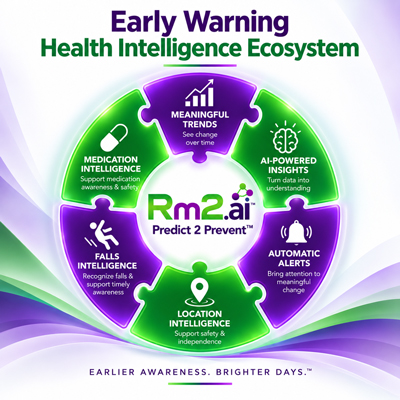
The future opportunity is to connect these fragmented signals. Imagine an ecosystem capable of considering vital-sign trends alongside activity, medication information, falls, sleep and location. The real value does not necessarily come from any single stream of information. It comes from context and from understanding how different pieces may relate to one another over time.
This is one of the principles behind the work we are undertaking at Rm2.ai™: transforming continuous health and safety information into meaningful trends, insights and alerts that can support earlier awareness and better-informed decisions. But the opportunity extends far beyond any single platform. Health intelligence could help create a stronger bridge among older adults, families, home-care organizations, senior living communities, physicians, pharmacists, hospitals and health plans groups that today frequently see only fragments of an individual's health journey.
As healthcare systems increasingly explore technology-supported approaches to chronic care and aging at home, the home itself may become an increasingly important source of longitudinal health information. The physician's office and hospital remain essential, but technology is creating greater visibility into what happens between those interactions. Closing that health visibility gap may become one of the most valuable contributions of AI-powered health intelligence.
There is, however, an important caution. The future of elder-care AI cannot be built simply by collecting everything technology allows us to collect. Older adults deserve privacy, autonomy and dignity. Families deserve transparency about what information is collected, who can access it and how it is used. Care professionals need systems that reduce rather than increase alert fatigue. AI-generated information also requires appropriate human oversight and clear boundaries. Health-intelligence technology should support professional judgment, not replace it.
We are approaching an important inflection point. The first generation of connected elder-care technology helped us see people remotely. The next generation must help us understand change. Consider this, the future is not a smartwatch generating hundreds of readings or another device sending data to another dashboard. It is an intelligent ecosystem capable of helping transform continuous information into a clearer picture of an older person's changing health, safety and well-being. It is not about replacing caregivers with algorithms; it is about giving caregivers greater visibility. It certainly is not about replacing doctors; it is about helping relevant information travel with the individual between healthcare encounters. And it is not about predicting every medical event; it is about creating opportunities to recognize meaningful change earlier so that the appropriate person has an opportunity to respond. The next era of senior care will be defined not by how much we monitor, but by how early we understand change and how effectively we act on it.
Company :
Remember2
Management Corlette Deveaux, CEO and Co-Founder
Description
For decades, elder care has largely operated around a familiar model: something changes, someone notices and the healthcare system responds.

